
Interest in mild hyperbaric oxygen therapy (mHBOT), which uses lower pressures than conventional hospital treatment, has continued to grow in 2026, with new clinical studies launching and several reviews examining how it differs from traditional hyperbaric oxygen therapy (HBOT).
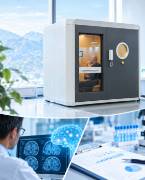
Two treatments, two definitions
A narrative review published on 30 June 2026 notes that the terms HBOT and mHBOT are often used as if they were synonymous by chamber sellers, practitioners and even some scientists. The authors argue they are not. According to the review, the US-based Undersea and Hyperbaric Medical Society defines clinical HBOT as treatment at more than 1.4 atmospheres absolute (ATA) with 100% oxygen. Mild hyperbaric exposures are generally described as lower-pressure treatments. An earlier crossover study, for example, defined mild hyperbaric oxygen as exposure to 25–40% oxygen at around 1.2–1.4 ATA.
A separate narrative review, published in the second-quarter 2026 issue of its journal, reached a similar conclusion on physiology. It reports that mild hyperbaric oxygen treatment may benefit peripheral microcirculation, parasympathetic activity and metabolism, but has not been studied extensively as a wound treatment. Because mild treatment uses lower oxygen concentrations, the authors say the risk of oxidative damage may be lower than with traditional HBOT. They also caution that both approaches carry potentially life-threatening risks, including chamber fire or explosion, and that adherence to safety standards may reduce adverse events.
New clinical research
In March 2026, Southern Cross University and the Melbourne Integrative Oncology Group announced a clinical study on high-grade glioma, according to a press release distributed by PRNewswire. The researchers say it is believed to be the first trial worldwide to test mild hyperbaric oxygen therapy (1.35 ATA) combined with molecular hydrogen in an oncology setting. The release states that use of HBOT during active cancer treatment remains limited and is not part of routine oncology care, and that the study aims to generate high-quality evidence.
Another study, published in July 2026, examined mHBOT in healthy young adults at high altitude, measuring cognitive performance and sleep quality. The authors describe it as exploratory and report preliminary evidence that five days of mHBOT may be linked to altered brain activation during working-memory tasks. They acknowledge limitations, including a within-subject design and the absence of a sham control.
Evidence still developing
Taken together, the 2026 literature suggests mild hyperbaric oxygen is an active area of investigation, while the authors of these publications emphasize that its effects should not be assumed to match those of conventional HBOT and that further controlled studies are needed.