
Therapy
In recent years, hyperbaric oxygen chambers have been hailed by many as a miracle cure-all for fatigue and poor health. But doctors caution that hyperbaric oxygen therapy (HBOT) is a tightly regulated medical procedure that must be carried out in licensed hospitals under professional supervision to be both safe and effective.
What exactly is “high-pressure oxygen”?
According to Yang Yingmin, director of the Rehabilitation Center and Hyperbaric Oxygen Center at Wenzhou Heping International Hospital, HBOT involves placing a patient in a sealed medical chamber where they breathe high-purity oxygen at above-normal atmospheric pressure. This raises blood oxygen levels and helps repair damaged tissue, making it widely used to treat ischemic and hypoxic conditions.
Yang compares the mechanism to carbonating soda: under pressure, oxygen dissolves directly into blood plasma and bodily fluids rather than relying solely on red blood cells for transport, creating a “fast lane” that reaches oxygen-starved tissue. This pathway can boost local oxygen levels, shrink swelling, clear abnormal gas bubbles, and inhibit anaerobic bacteria.
A therapy with real restrictions
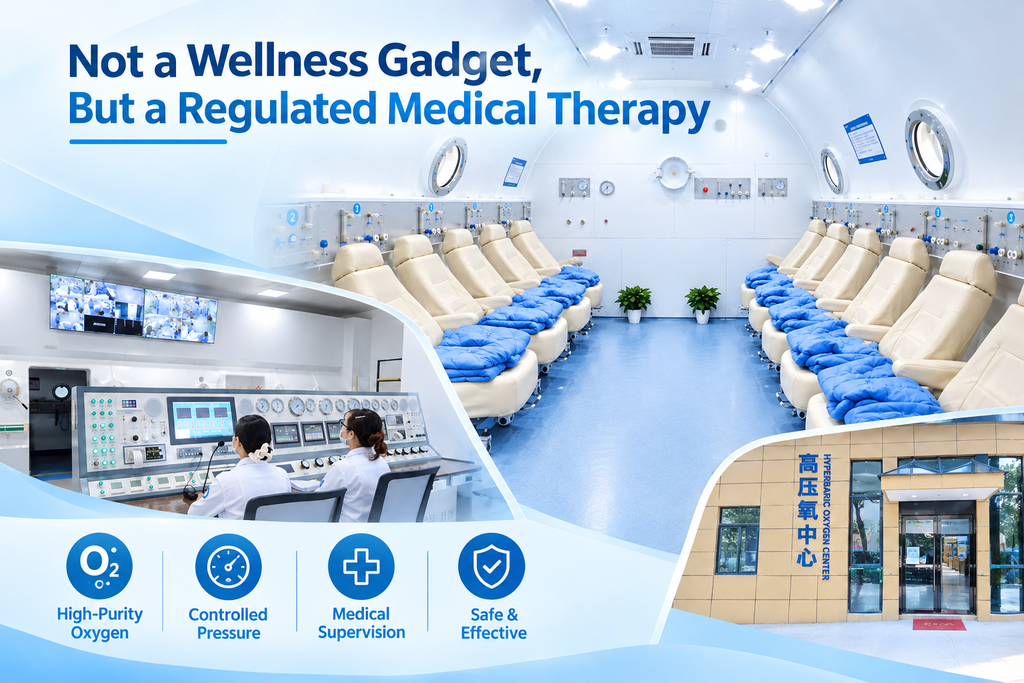
HBOT is primarily used in two settings: emergency care — for conditions like carbon monoxide poisoning, decompression sickness, and post-cardiac-arrest brain hypoxia — and rehabilitation, aiding recovery from brain or nerve injuries and complex wounds. Every patient must undergo a full medical evaluation before entering the chamber, and licensed facilities are required to meet strict national safety standards, including pressure-vessel testing and emergency decompression systems.
What about healthy people seeking an energy boost?
Nurse manager Chen Mengmeng notes that even non-medical HBOT sessions can cause temporary blood pressure spikes during pressurization, so anyone with cardiovascular conditions should consult a doctor first. For people dealing with insomnia or anxiety, doctor-supervised sessions may help, but a full course of over ten treatments is typically needed to see results.
As for students hoping HBOT might cure exam-season brain fog, Yang says it may help in cases of severe, confirmed hypoxia unresponsive to plain oxygen — but minors need professional screening first. For otherwise healthy people, he recommends aerobic exercise over oxygen chambers.