
A new review finds that pressurized oxygen treatment could help fight glioblastoma, but scientists warn it may also fuel tumor growth under the wrong conditions
Glioblastoma is widely regarded as one of the most lethal brain cancers, notorious for returning even after aggressive surgery, radiation and chemotherapy. Now, researchers are taking a fresh look at an unlikely ally in the fight against it: hyperbaric oxygen therapy (HBOT), a treatment long used for decompression sickness and stubborn wounds.
A new review published in the journal Neurosurgical Subspecialties examines a growing body of evidence suggesting HBOT could help overcome one of glioblastoma’s key defenses — its oxygen-starved environment — while cautioning that the same mechanism could, in some cases, backfire.
How It Works
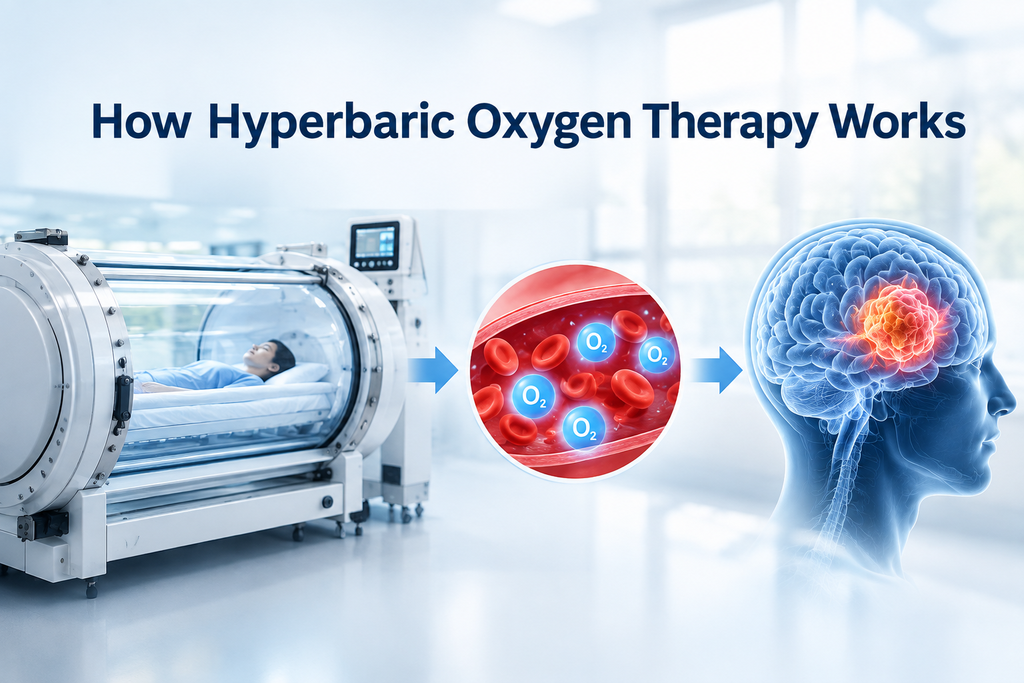
The concept behind HBOT is straightforward. Patients breathe pure oxygen inside a sealed chamber pressurized to 1.5 to 3 times normal atmospheric pressure. That dramatically boosts the amount of oxygen dissolved in the bloodstream, flooding tissue that would otherwise be starved of it.
That matters for glioblastoma because tumor tissue is notoriously oxygen-poor — oxygen levels typically fall below 5%, and can drop below 0.1% in dead tissue at a tumor’s core. Cancer cells thrive in that low-oxygen environment, using it to switch on genes linked to aggressive growth, invasion and drug resistance. Researchers behind the review argue that reversing this oxygen deficit could strip away one of the tumor’s key survival advantages.
The Case For: Better Radiation, Better Chemo, Weaker Cancer Stem Cells
Drawing on a wide body of research, the review lays out several ways HBOT appears to help:
- Radiation gets a boost. Higher oxygen levels amplify the DNA damage that radiation inflicts on tumor cells, and studies in animal models have shown slower tumor growth and longer survival when HBOT is paired with radiotherapy.
- Chemotherapy works better. Combined with the standard drug temozolomide, HBOT appears to dial down several inflammation- and blood-vessel-growth signals inside tumors, resulting in smaller tumors and longer survival in preclinical studies.
- The tumor’s environment shifts in the patient’s favor. By normalizing blood vessels and reducing swelling around the tumor, the therapy may help drugs penetrate more effectively and reshape how immune cells behave near the tumor site.
- Cancer stem cells take a hit. The therapy also appears to suppress markers tied to the self-renewing “seed” cells that drive tumor regrowth — a potential edge against recurrence.
The Catch: A Treatment That Could Cut Both Ways
But the review is careful not to oversell the therapy. Some studies have found the opposite effect — tumors growing larger and more aggressive under hyperbaric conditions. The reasons why come down to basic biology:
- Flooding tissue with oxygen generates oxidative stress, which can damage DNA and potentially increase mutation rates.
- Certain molecular pathways that help tumors survive and grow can actually be activated, not suppressed, by the therapy — including ones that spur new blood vessel formation.
- Cycling between low and high oxygen levels during treatment can itself trigger the kind of stress response that helps cancer cells adapt and proliferate.
Crucially, the review notes that which effect wins out — tumor suppression or tumor growth — appears to hinge on the specifics: how much pressure is used, how long each session lasts, and how often treatment is repeated. In other words, this isn’t a one-size-fits-all therapy.
Where Things Stand Today
Hyperbaric oxygen already has an established role in neurosurgery, primarily for treating radiation-induced tissue damage and aiding post-surgical recovery, where it helps reduce swelling and repair damaged tissue. Using it as a direct weapon against the tumor itself — alongside radiation and chemotherapy — remains experimental. Small studies have hinted at longer survival times, but results are inconsistent, and no large-scale clinical trials have yet confirmed the benefit.
What Comes Next
The review’s authors point to several priorities for future research:
- Fine-tuning the protocol — testing how different pressure levels, session lengths and treatment frequencies affect tumors with different genetic profiles, such as IDH mutation status or MGMT methylation.
- Identifying the right patients — finding biomarkers that could predict which patients are most likely to benefit.
- Timing the treatment — determining whether HBOT works best before, during or after radiation and chemotherapy.
- Exploring new combinations — including pairing HBOT with immune checkpoint inhibitors, targeted drug therapies, or Tumor Treating Fields (TTFields), an emerging electric-field-based cancer treatment.
The authors acknowledge the review’s limitations, noting that as a mini-review, it doesn’t statistically synthesize all available data, and that current clinical evidence remains preliminary — based largely on small, non-randomized studies without standardized treatment protocols. Larger, well-designed randomized controlled trials will be needed before hyperbaric oxygen can be considered a mainstream part of glioblastoma treatment.
Source: Gong, S., et al. (2026). Dual Effects and Clinical Application Prospects of Hyperbaric Oxygen Therapy in Glioblastoma: A Mini Review. Neurosurgical Subspecialties. DOI: 10.14218/nsss.2025.00047